

Moving beyond compliance and symbolism. Designing for belonging.
Inclusion and belonging are created where curiosity, values and purpose meet lived experience, thoughtful execution and leadership accountability.
BELONGING CO FRAMEWORK – A COMMUNITY CENTRED APPROACH TO INCLUSION, ENGAGEMENT & ACTIVATION

Many organisations have community and diversity strategies, engagement processes, and inclusion initiatives.
Policies are written.
Training is delivered.
Consultations happen.
Event is produced.
Yet people’s lived experience often stay the same. The potential for social and cultural impact is not realised. That is because the conditions for belonging remain unexplored.
Belonging Co takes a different approach: less tick-a-box compliance, and more systemic diagnosis, genuine engagement that builds the conditions for participation and belonging – across workplaces and across communities - in strategies, programs and activations.
The Belonging Co approach is guided by the Belonging Co Framework, which has four connected elements:
Belonging Shift - the change
Belonging Lens - the diagnostic tool
Leadership capability - the driver of change
Community perspective - the guiding philosophy
Through this approach, Belonging Co supports organisations and leaders to examine gaps and barriers, move from intention to impact, and embed belonging into systems, programs and activations.
The Belonging Shift (The change)
The transformation from compliance to belonging
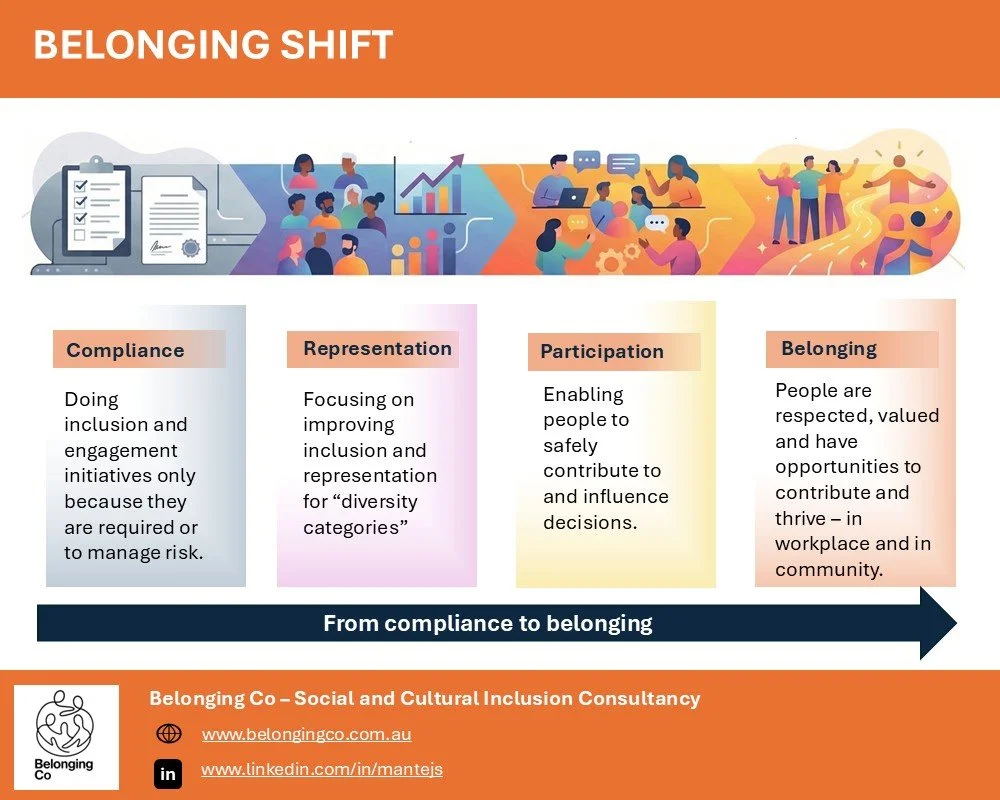
Place activation, community program, or workplace inclusion initiatives - This shift asks leaders and organisations to move beyond symbolic inclusion toward trust, participation, shared outcomes and building belonging.
At the belonging stage, people are not only present — they are able to participate, influence decisions, and feel respected within their workplaces and communities - and are contributing and thriving.
2. The Belonging Lens (The diagnostic)
See what helps and what blocks belonging
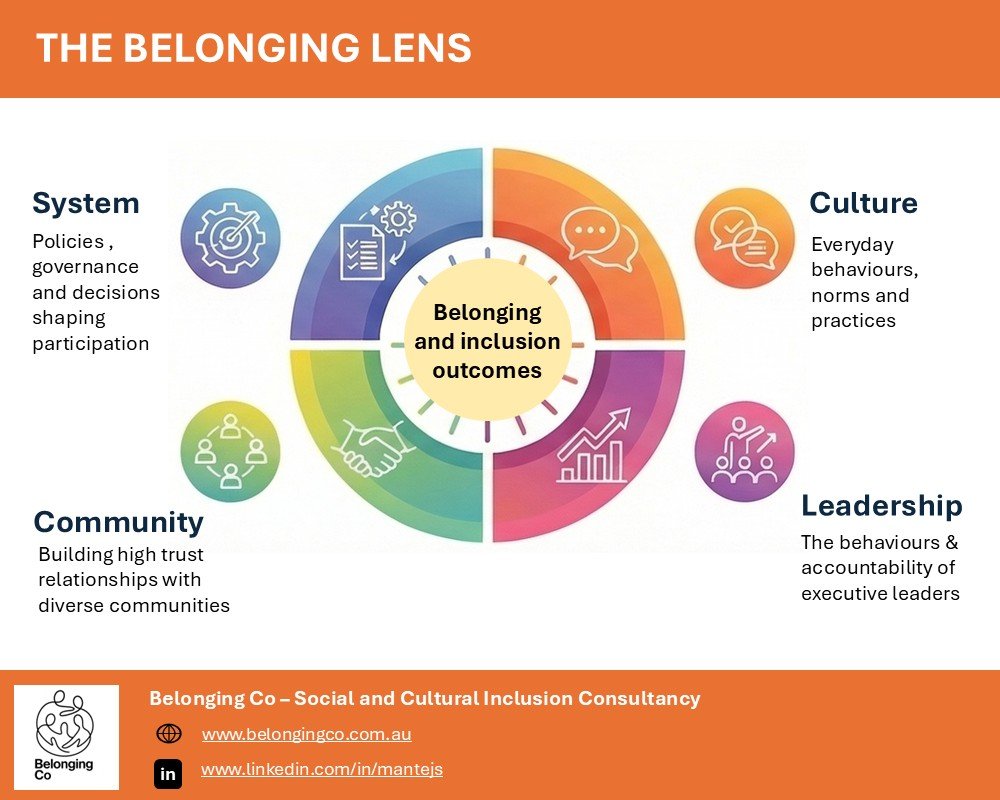
A practical diagnostic across four dimensions: Systems, Culture, Community, and Leadership.
Together, these dimensions reveal where belonging is enabled, where it is blocked, and where organisations and leaders can focus attention to shift barriers into opportunities for participation and belonging.
3. The Belonging Leadership Mindset (The driver)
Lead with values that build trust and belonging
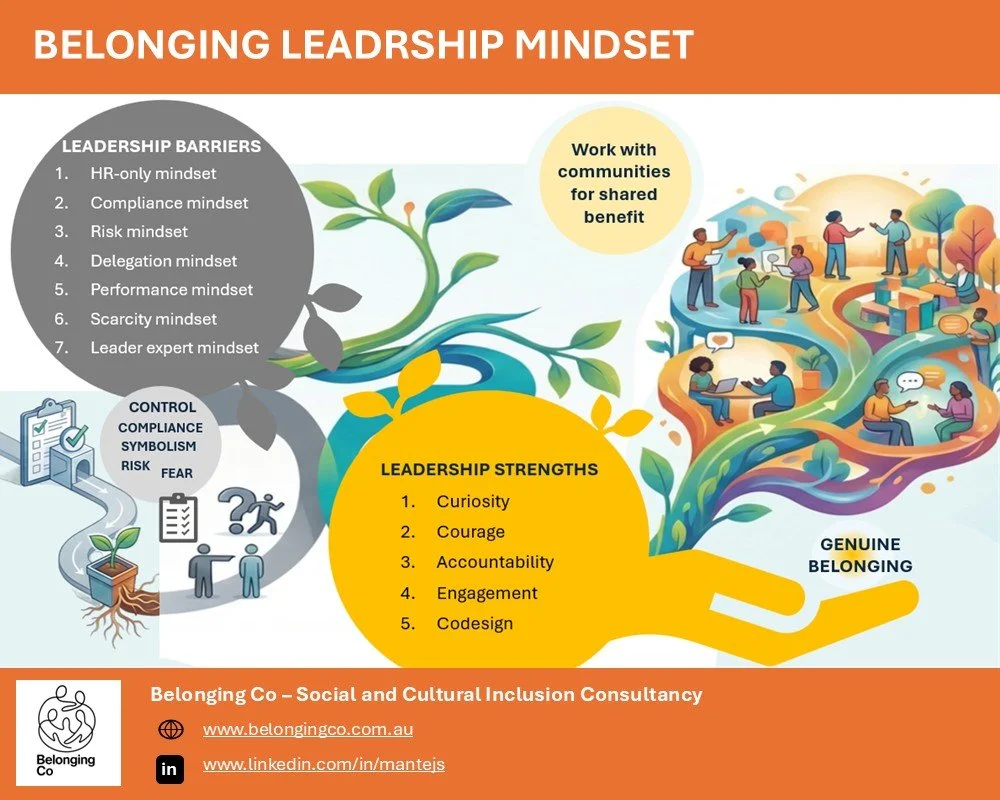
Belonging requires leaders to activate, enable, and nurture it. Developing the capability of leaders to listen deeply, share power, act on feedback, and hold themselves accountable for belonging outcomes is crucial for this.
The leaders who build belonging also recognise and challenge their own mindset barriers.
4. The Community perspective (The guiding philosophy)
Design for and with communities, even in workplaces
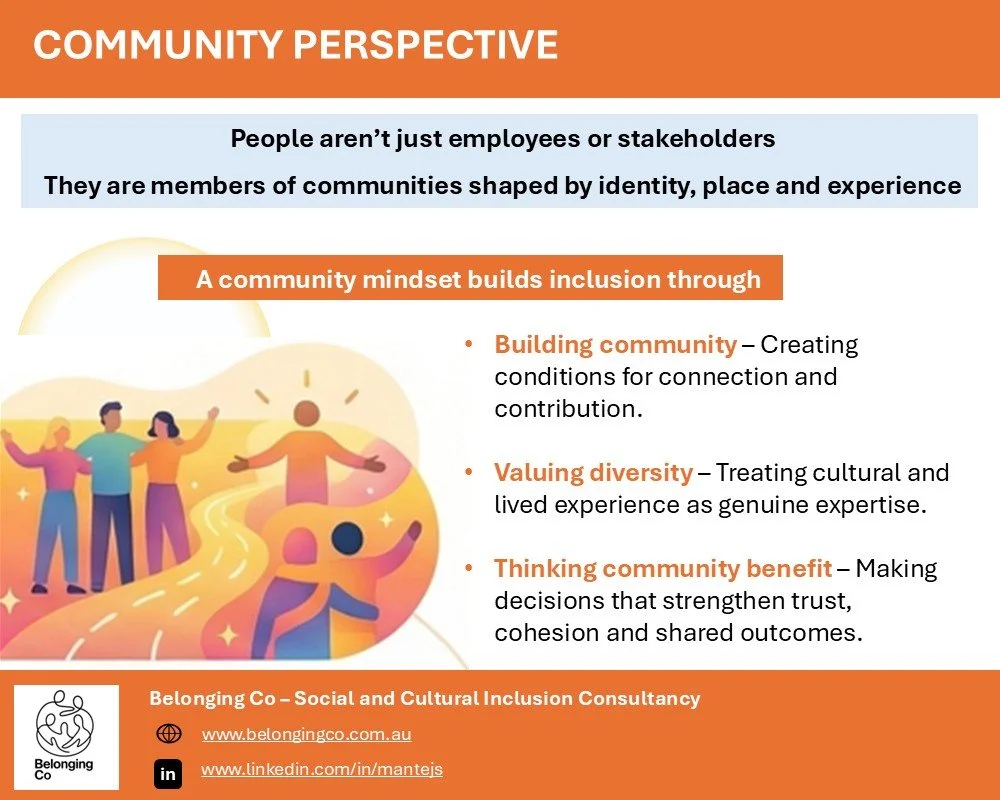
A community perspective recognises that people are not only employees, clients or stakeholders — they are communities shaped by culture, identity, place and lived experience.
This requires actively building community, valuing community diversity as a strength, and considering community benefit in every decision.